10 Coping Strategies for Anxiety & Stress Relief: Your Mental Health Test Toolkit
Feeling overwhelmed by a constant current of anxiety or the heavy weight of stress? You're not alone. In our fast-paced world, these feelings are incredibly common. The key isn't to eliminate them entirely, but to build a toolkit of effective responses. If you've ever asked yourself how to test mental health when these feelings arise, the first step is often learning how to manage the moments of overwhelm. This guide provides 10 simple, science-backed coping strategies for anxiety that you can use right now to find relief and build long-term resilience. Think of this as your personal mental health first-aid kit, ready whenever you need it. To better understand your starting point, you can always take a free assessment to gain clarity.
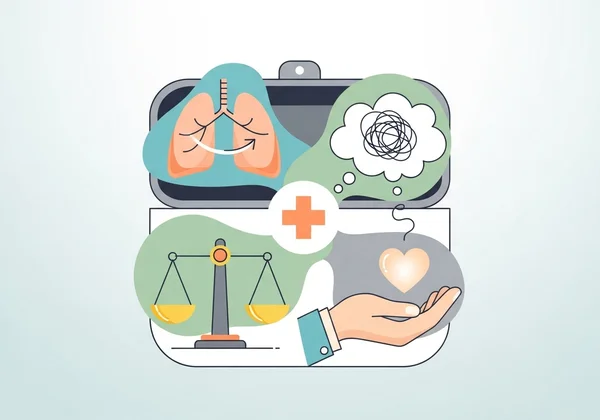
Immediate Coping Strategies for Anxiety
When anxiety strikes, it can feel like a tidal wave. The goal in these moments is to find an anchor. These techniques are designed to ground you quickly, pulling you out of the storm of racing thoughts and back into the safety of the present moment.
Master Your Breath: Box Breathing & 4-7-8 Technique
Your breath is one of the most powerful tools you have for regulating your nervous system. When you're anxious, your breathing becomes shallow and rapid. Consciously slowing it down sends a signal to your brain that the danger has passed.
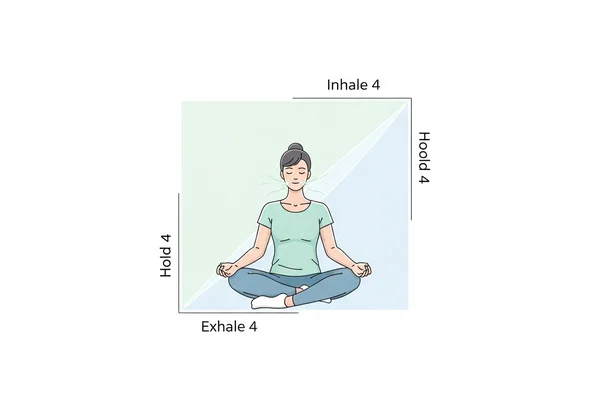
- Box Breathing: Simple and effective. Inhale for a count of four, hold your breath for four, exhale for four, and hold again for four. Visualize drawing a box with your breath. Repeat this cycle for a few minutes.
- The 4-7-8 Technique: A deeply calming practice. Inhale quietly through your nose for four seconds. Hold your breath for a count of seven seconds. Exhale completely through your mouth, making a whoosh sound, for eight seconds. This cycle is one breath. Repeat it three more times.
Ground Yourself: The 5-4-3-2-1 Method for Present Moment Awareness
Anxiety often pulls our minds into worrying about the future or ruminating on the past. Grounding techniques, like the 5-4-3-2-1 method, are designed to bring your focus back to the present moment through your senses. It’s a powerful way to interrupt a spiral of anxious thoughts.
Here's how it works. Wherever you are, pause and gently notice:
- 5 things you can see: Look around and name five objects in your immediate environment. A pen, a crack in the ceiling, a leaf on a plant.
- 4 things you can feel: Bring your attention to the physical sensations. The texture of your shirt, the solid ground beneath your feet, the cool air on your skin.
- 3 things you can hear: Listen closely for three distinct sounds. The hum of a computer, birds chirping outside, your own breathing.
- 2 things you can smell: What scents are in the air? The faint smell of coffee, soap on your hands, or the fresh scent of an open window.
- 1 thing you can taste: Focus on one thing you can taste. The lingering flavor of your last meal, a sip of water, or simply the natural taste of your own mouth.
Move Your Body: Quick Physical Releases for Tension
Anxiety and stress create very real physical tension. Your shoulders might be hunched, your jaw clenched, and your stomach in knots. Releasing this physical energy can provide immediate mental relief. You don't need a full workout; even small movements can make a huge difference. Try progressive muscle relaxation—tensing a muscle group for five seconds and then releasing it—starting from your toes and working your way up. A few minutes of stretching or even just shaking your arms and legs can help dissipate that nervous energy. Understanding the connection between your body and mind is key to managing your emotional wellbeing. A free anxiety test can help you see how physical symptoms might be linked to your mental state.
Effective Stress Management Techniques for Daily Life
While immediate coping skills are crucial for acute anxiety, building daily habits is the key to managing long-term stress. These are proactive strategies that help you maintain balance and prevent stress from becoming overwhelming in the first place.
Mindful Moments: Incorporating Short Mindfulness Practices
Mindfulness is simply the practice of paying attention to the present moment without judgment. It’s about observing your thoughts and feelings without getting swept away by them. You can incorporate this into your day in small ways. Spend one minute focusing solely on the sensation of drinking your morning coffee. Take a "mindful walk" where you pay attention to the feeling of your feet on the ground and the sounds around you. These small moments build your "mindfulness muscle" over time.
Challenge Negative Thoughts: Simple Cognitive Reframing
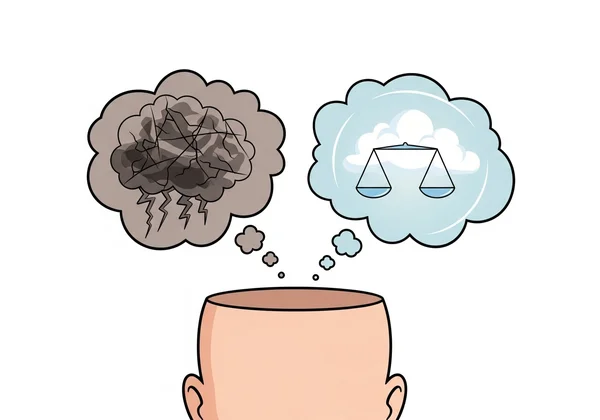
Our thoughts shape our reality. Stress and anxiety often come with a pattern of negative thinking, such as catastrophizing (imagining the worst-case scenario) or black-and-white thinking. Cognitive reframing is the practice of identifying and challenging these unhelpful thoughts. When you catch yourself thinking, "I'm going to fail this presentation," pause and ask: "Is that 100% true? What's a more balanced perspective?" Perhaps a more realistic thought is, "I'm nervous, but I've prepared, and I'll do my best." This isn't about forced positivity; it's about finding a more accurate and less distressing way to view a situation.
Connect & Communicate: The Power of Social Support
Humans are social creatures. When we're stressed, our instinct can be to withdraw, but connection is often the best medicine. Sharing what you're going through with a trusted friend, family member, or partner can lighten the load significantly. It reminds you that you're not alone and allows others to offer support and perspective. Sometimes just voicing your worries out loud is enough to rob them of their power. Taking time to explore your wellbeing includes nurturing these vital connections.
Building Long-Term Resilience & Emotional Wellbeing
True emotional wellness isn't about never feeling stressed; it's about your ability to bounce back from it. Building resilience is an ongoing process that involves tending to your foundational needs and making conscious choices that protect your mental energy.
Prioritize Self-Care: Sleep, Nutrition, and Hobbies
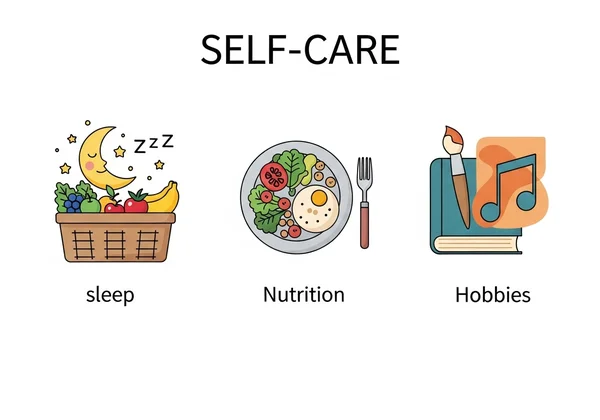
This may sound basic, but it's the bedrock of mental health. Consistent, quality sleep is non-negotiable for a stable mood and a calm mind. A balanced diet fuels your brain and body, helping regulate everything from energy to emotions. Finally, making time for hobbies and activities you genuinely enjoy—without a goal of productivity—is essential for recharging and preventing burnout. This is your time to simply be.
Set Boundaries: Protecting Your Energy and Time
Boundaries are the limits you set to protect your physical and emotional energy. This can mean saying "no" to extra commitments when you're already overloaded, limiting your exposure to negative people or content, or scheduling dedicated "unplugged" time away from work emails and social media. Setting boundaries is not selfish; it's a necessary act of self-preservation that prevents chronic stress and resentment from building up.
Seek Professional Support When Needed
There is immense strength in knowing when to ask for help. While these coping strategies are powerful, they aren't a substitute for professional care. If your anxiety or stress is persistent, severe, or significantly impacting your daily life, speaking with a therapist or counselor is a crucial next step. A great place to start that conversation is by understanding your own symptoms. An online mental health test can provide a clear, structured summary of what you've been experiencing, making it easier to talk to a professional.
Disclaimer: This article is for informational purposes only and does not constitute medical advice. The content is not intended to be a substitute for professional medical advice, diagnosis, or treatment. Always seek the advice of your physician or other qualified health provider with any questions you may have regarding a medical condition.
Your Personalized Path to Calm: Taking Charge of Your Mental Health
Managing anxiety and stress is a journey, not a destination. The ten strategies outlined here are your tools to navigate the ups and downs with greater confidence and calm. From immediate grounding techniques to long-term resilience builders, you have the power to influence your emotional state. The first step is awareness—understanding what you're feeling and why.
Ready to take that first step? Take a free, confidential mental health assessment on our platform to gain personalized insights into your emotional wellbeing today. Knowing your starting point can help you choose the coping strategies that will work best for you.
Frequently Asked Questions About Coping with Anxiety & Stress
How quickly can coping strategies for anxiety provide relief?
Answer: Techniques like deep breathing and the 5-4-3-2-1 grounding method can provide relief within minutes. They are designed to quickly regulate your physiological response to anxiety. The key is consistent practice, so they become second nature when you need them most.
Are these stress management techniques suitable for everyone?
Answer: The strategies listed here are generally safe and beneficial for most people. However, everyone is unique. What works wonderfully for one person may not work as well for another. We encourage you to experiment and see which techniques resonate with you and fit into your lifestyle.
When should I seek professional help for anxiety or stress?
Answer: You should consider seeking professional help if your anxiety or stress feels unmanageable, lasts for several weeks, interferes with your work, school, or relationships, or if you experience physical symptoms like panic attacks. A tool like our confidential test can be a helpful starting point for gathering your thoughts before speaking with a doctor or therapist.
What are 5 signs of poor mental wellbeing?
Answer: Five common signs include persistent sadness or irritability, a significant change in sleep patterns (too much or too little), loss of interest in activities you once enjoyed, difficulty concentrating, and social withdrawal. If you recognize these signs in yourself, it's a good idea to explore them further.