Broad Mental Health Test or Specific Scale?
Why a general mental health snapshot is sometimes only the first step
A broad mental health check-in can be useful when the problem still feels blurry. It can help someone notice that anxiety, low mood, stress, and resilience are all part of the picture instead of forcing an early guess.
That kind of broad snapshot is often a good first step. It becomes especially useful when someone wants a private, low-pressure way to ask, "What has been feeling off lately?"
The next step depends on what stands out. A broad mental health check-in can open the question, while a narrower scale may help clarify one part of it. Disclaimer: The information and assessments provided are for educational purposes only and should not replace professional medical advice, diagnosis, or treatment.
What a broad mental health test is good at

A broad test is most useful when someone wants structure without choosing one label too early.
Spotting a general pattern across anxiety, mood, stress, and resilience
A broad result can show whether distress feels concentrated in one area or spread across several. That matters because many people do not arrive with a clean, single-theme experience.
Sometimes anxiety stands out first. Sometimes low mood does. Sometimes stress feels high while resilience feels worn down. A mental wellness snapshot is helpful because it can show that wider pattern before the next decision.
Why a broad result is not a diagnosis
A broad result is still a screening-style check-in, not a formal diagnosis. It can support self-reflection and planning, but it cannot replace a qualified clinician's evaluation.
That boundary is important because a broad test is designed to orient attention, not to settle every question. Its value is in pointing toward the next useful step.
When a specific scale adds clarity
A more focused scale becomes helpful when one symptom pattern is clearly asking for a closer look.
When GAD-7 is the better follow-up question
PubMed-indexed research on the GAD-7 describes it as a 7-item measure. It was developed to identify probable cases of generalized anxiety disorder and assess symptom severity. That makes it a better follow-up when worry, tension, restlessness, and anxious anticipation are doing most of the heavy lifting in the broad result.
It is not the right next step just because anxiety exists somewhere in the picture. It is more useful when anxiety is clearly the pattern that needs a closer question.
When PHQ-9 gives a more useful depression check
PubMed-indexed research on the PHQ-9 describes it as a 9-item depression severity measure. It is based on diagnostic criteria for depressive disorders. That makes it more useful when low mood, loss of interest, low energy, hopelessness, or slowed daily functioning are more central than anxiety.
This is where a general mental health test can still help. It may not answer every question by itself, but it can point toward the specific scale that fits the strongest pattern.
How to choose the next step without overtesting
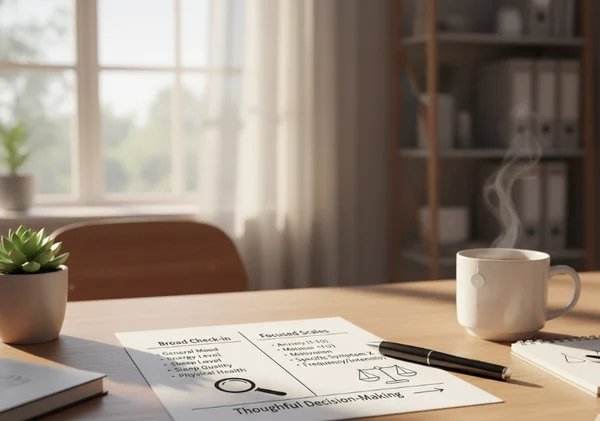
More tests do not always mean more clarity. The goal is to choose the next question that fits the current pattern, not to collect every possible score.
Follow the symptom pattern, not curiosity alone
If one domain keeps standing out, follow that thread. If anxiety is the clearest issue, a focused anxiety scale may add more value. If depression-like symptoms are taking over, a depression-specific scale may be the more useful follow-up.
A simple 3-step filter can help:
- Notice which domain stands out most.
- Pick 1 follow-up scale that matches it.
- Write down what has changed before taking it.
That approach keeps screening practical instead of overwhelming.
When you should not wait for another test
Do not wait for another scale if symptoms are becoming unsafe or overwhelming. Seek support sooner if distress is severely affecting daily functioning, if there is concern about self-harm, or if the emotional burden feels too hard to manage alone.
SAMHSA's National Helpline is free, confidential, and available 24/7, 365 days a year for treatment referral and information. If there is immediate danger, contact local emergency services right away.
When symptoms are urgent, direct support matters more than another score.
A simple path from self-check to real support
A test is most useful when it leads to a calmer next action.
Use the result as a conversation starter
The broad result can help explain what has been hard lately. A focused scale can then add more detail if one area needs closer attention.
That combination can make a later conversation with a doctor, therapist, or counselor feel more specific. It gives language to the pattern without pretending to replace clinical judgment.
Keep notes short and practical
Short notes often help more than detailed analysis. Write down what symptoms are strongest, how long they have been present, and what daily tasks feel harder than usual.
Those notes can make the next step clearer whether the next step is another scale, a professional conversation, or both.
What to do next if one area keeps standing out
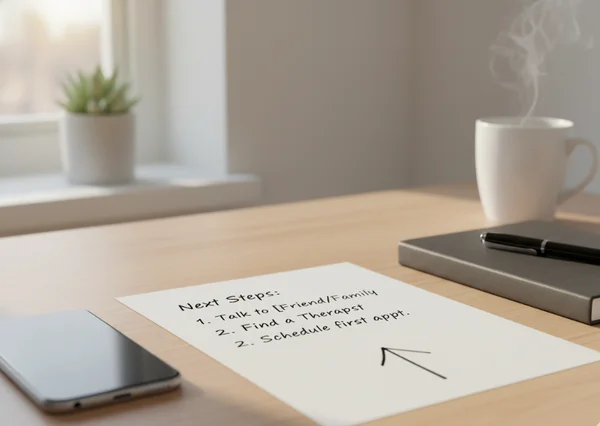
If one area keeps standing out, follow that signal with care. A broad check-in can be enough for reflection at first, but a more focused scale or professional support may become the better next step when the pattern stays strong.
What matters most is not collecting every possible result. What matters is moving from a useful first snapshot to a more appropriate next action. If distress is persistent, escalating, or impairing daily life, seek professional help instead of relying on repeated self-testing alone.
FAQ about broad vs specific mental health tests
Should you take every scale you can find?
Usually no. It is often more useful to choose one follow-up scale that fits the strongest pattern instead of taking many tests without a clear reason.
Can a broad test miss something important?
Yes. A broad result can be a helpful first step, but it may not explain one specific condition in enough detail. That is when a focused scale or professional evaluation can add clarity.
When should you contact a professional directly?
Contact a professional directly when symptoms are worsening, daily functioning is dropping, or safety concerns are present. A test can support that decision, but it should not delay it.