Building Resilience: Mental Health Test & Strategies
Life often feels like a series of unexpected challenges. From work deadlines to personal struggles, the weight of modern living can be heavy. You might find yourself wondering why some people seem to bounce back from hardship while others feel stuck in a cycle of worry. This ability to recover and adapt is known as resilience. It is not a fixed trait that you are born with; rather, it is a skill you can build over time with the right tools and mindset.
Are you feeling overwhelmed by the daily pressures of life? Knowing where you stand today is the first step toward a stronger tomorrow. Before diving into the strategies for growth, it is helpful to establish a baseline. You can start your test to get a clear picture of your current emotional state. This free, anonymous screening helps you understand your levels of stress and anxiety, providing a foundation for your resilience journey.
Understanding psychological resilience starts here. You'll learn to measure your adaptability and apply science-backed strategies to thrive under pressure. By understanding the science behind emotional strength, you can move from feeling stuck to feeling empowered.
Core Psychological Resilience Strategies
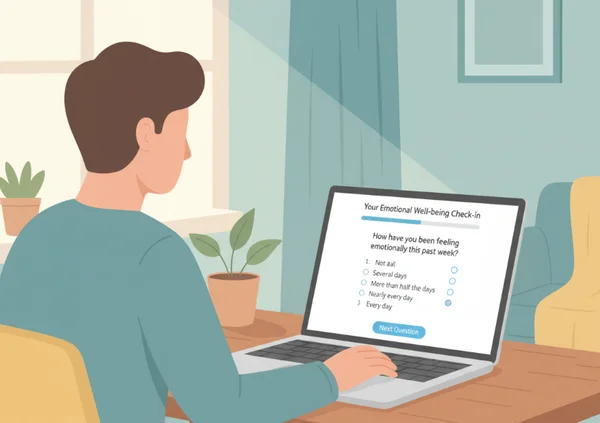
To build a house that lasts, you need a strong foundation. The same logic applies to your mind. Resilience is the foundation that allows you to weather the storms of life without breaking. It involves developing a set of psychological resilience strategies. These help you process difficult emotions and navigate change effectively. It is about learning to adapt when things do not go as planned.
What is Psychological Resilience?
Psychological resilience is the mental and emotional ability to recover quickly from difficulties. It is often described as "bouncing back" from adversity. However, resilience is more than just returning to your previous state; it is often about growing through the experience.
Think of resilience like physical exercise. Lifting weights causes micro-tears in muscles, but these heal stronger than before. Expert research shows that resilience involves a combination of your thoughts, behaviors, and actions. It is not about avoiding stress or pretending that everything is fine. Instead, it is about having the internal resources to face reality, accept what you cannot change, and take action on what you can. People with high resilience tend to maintain a sense of perspective and stay connected to their core values, even during a crisis.
Signs of Low Emotional Strength
It is hard to build strength if you do not realize where you are currently struggling. Many people live with high levels of stress for so long that they forget what "normal" feels like. Recognizing signs of low emotional strength is crucial. It signals when you need to slow down or seek support.
Common signs of low resilience include:
- Feeling constantly overwhelmed by small tasks.
- Persistent irritability or "snapping" at loved ones.
- Difficulty sleeping because your mind will not stop racing.
- Feeling hopeless or trapped by your circumstances.
- Withdrawing from friends and family because social interaction feels like too much work.
If these signs feel familiar, do not be discouraged. It simply means your current coping mechanisms are being stretched thin. Recognizing this is a brave first step. To get a more objective look at these symptoms, many people find it helpful to use our tool for a private self-assessment.
Assessing Your Capacity: The Mental Resilience Test
You cannot improve what you do not measure. In the world of fitness, you might track your heart rate or the weight you can lift. In mental health, we use evidence-based screening tools. A mental resilience test or a broad mental health screening provides data that moves beyond vague feelings. This clarity is incredibly powerful.
How Online Screening Measures Adaptability
Though not a medical diagnosis, online tests effectively screen resilience factors. They identify key stressors impacting your emotional adaptability. Most professional tools are based on clinically validated scales. For example, our clinically validated tool utilizes the GAD-7 (for anxiety) and the PHQ-9 (for depression). These are the same questionnaires often used by doctors and therapists worldwide.
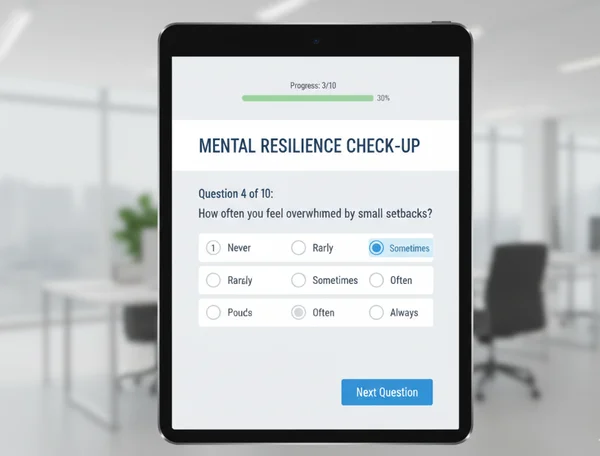
These tests measure your adaptability by looking at how frequently you experience certain emotional and physical symptoms over a two-week period. They evaluate three core areas: worry management, energy consistency, and overall mood patterns. By answering these questions honestly and anonymously, you get an immediate snapshot of your mental health. This process removes the guesswork and gives you a scientific starting point for your self-improvement journey.
Interpreting Your Mental Health Test Results
Once you finish a mental health test, you will receive a score and an assessment. Remember that a score is just a piece of information, not a label.
- Low scores usually suggest you are managing well. However, you might still benefit from learning new coping skills.
- Moderate scores signal that stress is starting to take a toll on your wellbeing. This is the perfect time to implement new habits.
- High scores indicate you are going through a very difficult time. These results invite you to reach out for professional help or change your self-care routine.
The goal of our platform is to empower you. After receiving your initial score, you can even opt for an AI-driven deep analysis. This personalized report looks at your specific challenges and suggests actionable steps tailored to your life, helping you bridge the gap between knowing your score and making a change.
Effective Coping Skills for Adversity
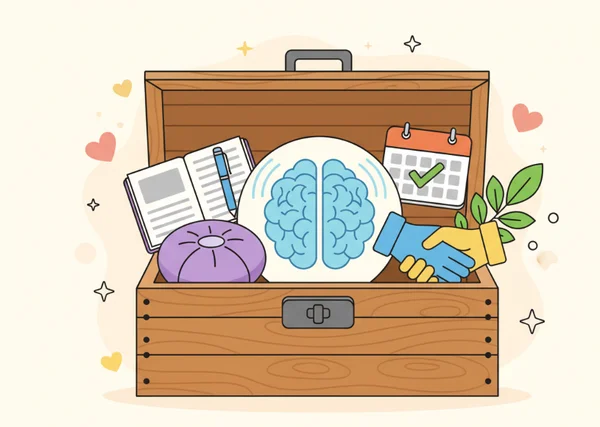
Once you have assessed your current state, the next step is to build your "toolkit." These are the coping skills for adversity that you can use whenever life feels like it is becoming too much. Coping skills are divided into two categories: things you can do right now and habits you build for the long term.
Immediate Techniques for Stress Management
When you are in the middle of a stressful moment, your "fight or flight" response is active. You need simple, physical ways to calm your nervous system. These techniques bring you back to the present moment:
- Box Breathing: Inhale for four seconds, hold for four, exhale for four, and hold for four. This simple rhythm tells your brain that you are safe.
- The 5-4-3-2-1 Grounding Method: Identify five things you see, four things you can touch, three things you hear, two things you can smell, and one thing you can taste.
- Physical Movement: Even a five-minute walk or stretching can burn off the cortisol (stress hormone) that builds up in your body during a crisis.
- Acceptance Statements: Sometimes, just saying "This is a hard moment, and that is okay" can reduce the intensity of the struggle.
These immediate actions help you regain control so that you can think more clearly about your next move.
Long-Term Habits for Building Emotional Strength
While immediate techniques help with the "fire," long-term habits prevent it from starting. Building emotional strength requires consistency. Think of these as preventative maintenance for your mind:
- Routine and Structure: Having a predictable daily routine reduces "decision fatigue" and provides a sense of safety.
- Social Connection: Resilience is not a solo sport. Reaching out to a trusted friend or joining a community group provides the emotional "cushion" we all need.
- Mindfulness and Journaling: Spending ten minutes a day reflecting on your thoughts helps you identify patterns. When you see a pattern, you can change it.
- Setting Boundaries: Learning to say "no" to things that drain your energy is one of the most effective ways to preserve your mental health.
By combining these long-term habits with regular self-checks, such as a free mental health test, you create a lifestyle that supports lasting resilience.
Summary: Taking Charge of Your Resilience Journey
Building resilience is a journey, not a destination. It is about understanding that while you cannot control everything that happens to you, you can control how you respond. By defining your strategies, assessing your current capacity with a mental health test, and practicing both immediate and long-term coping skills, you are taking charge of your emotional future.
Remember that it is okay to have bad days. Resilience does not mean you never feel pain; it means you trust yourself to handle the pain when it arrives. You don't have to navigate this path alone or in the dark.
Life’s challenges test us all—but with the right tools, you can grow stronger from them. Ready to take your first step? Taking a few minutes to check your emotional wellbeing today can provide the clarity you need to start building a stronger, more adaptable mindset.
Frequently Asked Questions About Mental Health & Resilience
How do I test my mental health accurately?
To test your mental health accurately, you should use tools based on clinically validated scales like the GAD-7 or PHQ-9. While these do not replace a doctor's diagnosis, they provide a reliable screening of your symptoms. For the best results, answer the questions based on how you have felt over the last two weeks, and be as honest as possible with yourself. You can access these clinical-grade tests for free on our platform.
What are 5 signs of poor mental wellbeing?
Signs of poor mental wellbeing can vary, but five of the most common indicators include:
- Persistent sadness or anxiety that lasts for more than two weeks.
- Changes in sleep or appetite, such as sleeping too much or not being able to eat.
- Withdrawal from activities and people you used to enjoy.
- Unexplained physical aches, such as headaches or stomach issues caused by stress.
- Difficulty concentrating or feeling "brain fog" that affects your work or school.
Do I have a mental health disorder or just stress?
It can be difficult to tell the difference between temporary stress and a mental health disorder. Generally, stress is a response to a specific external trigger (like a big project) and usually fades once the trigger is gone. A mental health disorder, such as Generalized Anxiety Disorder, involves persistent symptoms that interfere with your daily life even when there is no immediate "threat." If you are unsure, taking an online mental health test can help you see if your symptoms fall into a range that suggests a more serious condition. Always consult a professional if your symptoms feel unmanageable.