Comprehensive Mental Health Test: Understanding Conditions & Screening
Feeling overwhelmed or unsure about your emotions? You're not alone. Navigating the complexities of our inner world can be challenging, especially when feelings of anxiety, sadness, or stress become persistent. This guide offers a clear overview of common mental health conditions and explains how a confidential mental health test can be your first step towards understanding and support. So, how to test mental health in a way that feels safe and empowering? Let's explore.
Your journey is about gaining clarity, not seeking labels. By the end of this article, you will understand the purpose of a preliminary screening and feel confident in taking a free, confidential assessment to better understand your emotional wellbeing.

What Are Common Mental Health Conditions?
Mental health conditions are far more common than many people realize, affecting millions worldwide. They are genuine health issues that impact how we think, feel, and act. Understanding them is the first step toward compassion for ourselves and others. Below are brief overviews of some of the most prevalent conditions.
Anxiety Disorders: More Than Just Worry
Everyone experiences anxiety from time to time—it's a normal reaction to stress. However, for someone with an anxiety disorder, the fear and worry are not temporary and can be overwhelming. These feelings can interfere with daily activities such as job performance, school work, and relationships.
Anxiety disorders are a group of related conditions, not a single illness. They include Generalized Anxiety Disorder (GAD), characterized by chronic, exaggerated worry about everyday life, as well as panic disorder, social anxiety, and phobias. Common symptoms can include persistent feelings of tension, restlessness, a racing heart, and difficulty concentrating.
Depression: Understanding Persistent Sadness
Depression, or Major Depressive Disorder, is more than just feeling sad. It's a mood disorder that causes a persistent feeling of sadness and a loss of interest in activities you once enjoyed. It can lead to a variety of emotional and physical problems and can decrease your ability to function at work and at home.
Symptoms often include significant changes in sleep or appetite, a lack of energy, feelings of worthlessness or guilt, and difficulty thinking or making decisions. It's important to recognize that depression is a treatable medical condition, and seeking support is a sign of strength. Taking a preliminary depression test can be a helpful starting point.
Other Conditions: OCD, PTSD, & Brief Explanations
Beyond anxiety and depression, many other conditions can affect a person's mental wellbeing. Here are just a couple of examples:
- Obsessive-Compulsive Disorder (OCD): This condition involves unwanted, recurring thoughts (obsessions) and repetitive behaviors (compulsions). Compulsions are often performed in an attempt to make the obsessive thoughts go away.
- Post-Traumatic Stress Disorder (PTSD): PTSD can develop after experiencing or witnessing a terrifying event. Symptoms may include flashbacks, nightmares, severe anxiety, and uncontrollable thoughts about the event.
Understanding these conditions helps demystify them. They are not character flaws but health issues that deserve attention and care. A broad mental health screening can help identify patterns that may align with these or other conditions.
The Role of Mental Health Screening Tools
In a world where you can check your blood pressure at a pharmacy, why not your emotional health at home? That's where mental health screening tools come in. They are designed to be accessible, private, and informative, serving as a personal check-in for your mind.
Why Online Screening is a Valuable First Step
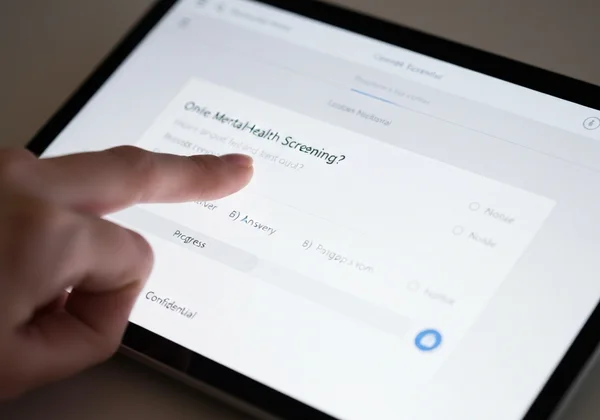
Taking an online mental health test is a proactive and empowering step. It offers a private, judgment-free space to answer honest questions about your feelings and behaviors. For many, this is far less intimidating than scheduling a doctor's appointment, especially when you're just starting to question if what you're feeling is "serious enough."
The benefits are clear:
- Accessibility: You can take a test anytime, anywhere.
- Anonymity: No registration is required, ensuring your data remains private.
- Immediacy: You receive your results instantly, providing immediate feedback.
- Empowerment: It provides a concrete starting point for self-reflection or a conversation with a professional.
If you're curious about your own emotional state, you can start your assessment in just a few minutes.
Screening vs. Diagnosis: What's the Key Difference?
This is one of the most crucial points to understand. An online screening tool is not a diagnostic tool. Think of it like a thermometer: it can tell you if you have a fever, but it can't tell you if you have the flu or a bacterial infection. A high temperature suggests you should see a doctor for a proper diagnosis.
Similarly, a mental health screening provides a snapshot of your symptoms and can indicate if you might be at risk for a particular condition. A formal diagnosis, however, can only be made by a qualified healthcare professional, like a psychiatrist, psychologist, or primary care physician, after a comprehensive evaluation. Our tools are designed for educational and informational purposes, empowering you with knowledge, not a label.
How Our Platform Uses Proven Scales (GAD-7, PHQ-9)
To ensure our screenings are reliable and meaningful, we don't use self-created quizzes. Our platform is built on scientifically validated assessment tools that are trusted and used by healthcare professionals worldwide.
- The GAD-7 Scale: This is a seven-question screening tool used to measure the severity of Generalized Anxiety Disorder. Our anxiety test utilizes this scale to help you quickly assess your anxiety levels.
- The PHQ-9 Scale: This nine-question instrument is a leading tool for screening, diagnosing, monitoring, and measuring the severity of depression. The PHQ-9 test on our site is based on this clinical standard.
By using these evidence-based scales, we ensure that your results are grounded in science, providing you with a trustworthy first look at your emotional health.
Taking Action After Your Mental Health Screening
Receiving your screening results is not the end of the journey—it's the beginning. The goal is to use this information to take positive, informed steps toward better wellbeing.
Interpreting Your Results & What They Mean
Once you complete a screening, you'll receive a score and a brief interpretation (e.g., minimal, mild, moderate, or severe symptoms). This score isn't a judgment; it's data. It helps you put a name to what you've been feeling and understand its intensity.
Use these results as a guide for self-reflection. Do the results align with how you’ve been feeling? Have you noticed these symptoms affecting your daily life? This objective feedback can validate your experiences and make them feel more manageable. For a clear picture of your emotional state, you can get your results anonymously.
Unlocking Deeper Insights with AI Analysis
On our platform, we offer something unique beyond a basic score. You have the option to receive a personalized, AI-driven deep analysis report. By providing a little more context about your lifestyle and coping mechanisms, our AI can generate a detailed report that highlights your personal strengths, challenges, and how your symptoms might be impacting your life.
This report translates your score into a meaningful narrative, offering actionable suggestions tailored to your situation. It's the difference between knowing your temperature and understanding potential reasons for your fever and what to do next.

Your Path to Better Mental Wellbeing: Take the First Step Today
Understanding common mental health conditions is about building knowledge and empathy. Using a screening tool is about taking a brave, private, and proactive step to check in with yourself. Your feelings are valid, and gaining clarity is a powerful move toward managing your emotional wellbeing.
You have the power to understand your mind better. If you're ready to move from uncertainty to insight, we invite you to take the first step today. Your journey toward self-awareness is completely confidential and free.
Frequently Asked Questions About Mental Health Screening
How accurate is an online mental health test?
Scientifically validated online mental health tests, like those based on the GAD-7 and PHQ-9 scales, are highly reliable for screening purposes. They are designed to accurately identify symptoms that may indicate the presence of a mental health condition. However, they are screening tools, not diagnostic ones, and are intended to be a starting point for further exploration.
How do I know if I might have a mental health disorder?
Recognizing a potential mental health disorder often involves noticing persistent changes in your thoughts, feelings, and behaviors that negatively impact your daily life. Common signs include prolonged sadness, excessive worry, social withdrawal, and difficulty functioning at work or school. Taking a confidential mental health disorder test can provide objective feedback and help you decide if it's time to speak with a professional.
What are some common signs of poor mental wellbeing?
Common signs of poor mental wellbeing can vary but often include changes in sleep or eating habits, low energy or chronic fatigue, increased irritability or anger, feeling hopeless or worthless, and misusing substances like alcohol or drugs to cope. It can also manifest as an inability to perform daily tasks or a loss of interest in things you used to enjoy.
Can an online screening replace a professional diagnosis?
No, absolutely not. An online screening is a valuable preliminary tool for self-assessment and education. It can help you organize your thoughts and prepare for a conversation with a doctor, but it cannot and should not replace a comprehensive evaluation and diagnosis from a qualified healthcare provider.