Green Ribbon Mental Health: Meaning, Color, and Thoughtful Ways to Use It
The green ribbon mental health symbol is a small visual cue with a large purpose: it shows support for mental health awareness, stigma reduction, and more open conversations about emotional well-being. You may see it during Mental Health Awareness Month in May, on a jacket, in a workplace campaign, or as a digital graphic shared online. The ribbon does not mean every story is the same, and it does not replace personal support or professional care. It simply gives people a gentle way to say, "mental health matters." If the symbol makes you wonder about your own recent patterns, an adult mental wellness self-check can be one private way to reflect.
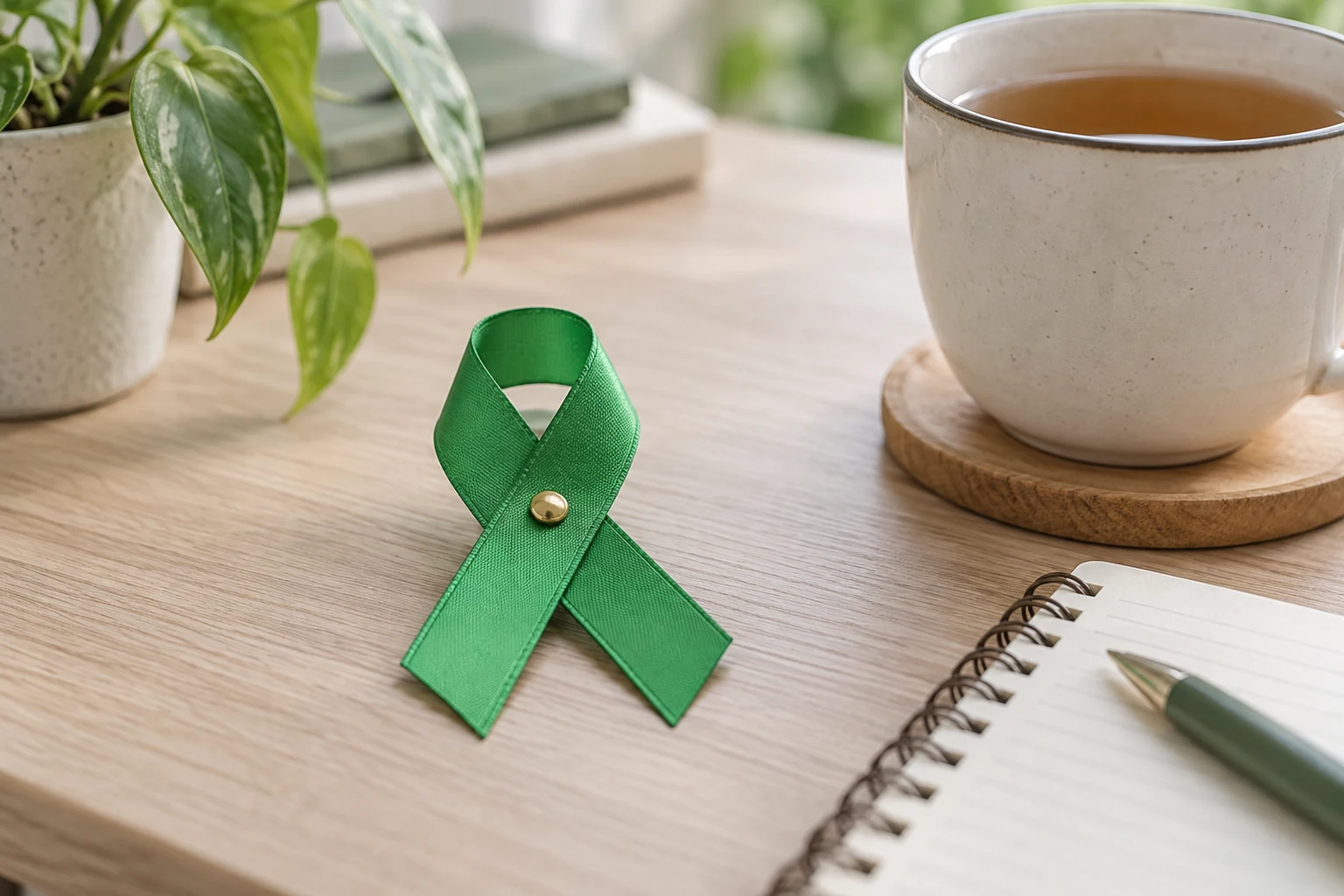
What the Green Ribbon Means in Mental Health Awareness
The green ribbon is widely used as a symbol of mental health awareness. In everyday language, it usually communicates support for people affected by mental health challenges, a desire to reduce stigma, and a belief that mental health deserves the same everyday attention as physical health.
The symbol works because it is easy to recognize without requiring a long explanation. A ribbon on a shirt, a green accent in a social post, or a green-lit public building can open the door to a conversation that might otherwise feel difficult to begin. It can say, quietly, "you are not strange for having a hard time" or "it is okay to talk about this."
That said, the ribbon is not a clinical sign. It does not identify a specific condition, severity level, or personal history. Someone may wear it because they support a loved one, work in care or education, or want a more open culture around mental health.
Why green became the mental health awareness color
Green carries associations that fit the tone many mental health campaigns want to create: growth, renewal, balance, hope, and a connection with nature. Those meanings are not medical facts, but they make the color feel less harsh and more approachable than a warning color might.
The green ribbon also follows a broader awareness-ribbon tradition. Ribbons make causes visible in public, and color helps people quickly recognize the theme. For mental health, green became a way to make an often private topic visible without forcing anyone to disclose personal details.
What the ribbon should and should not be asked to do
The ribbon can help start conversations, show solidarity, and remind communities to make room for mental health education. It should not be treated as proof that someone is well, unwell, ready to talk, or asking for advice. A symbol is most helpful when it is paired with respect for privacy.
If you wear or share it, the best message is simple: support is available, mental health is part of human life, and no one should be reduced to a label.

The Green Ribbon Story: From Awareness Campaigns to Everyday Use
The green ribbon story is often traced to mental health awareness campaigns that grew in visibility during the 1990s. Over time, advocacy groups, schools, workplaces, and public awareness events adopted green as a recognizable mental health color.
In the United States, Mental Health Awareness Month in May helped connect green with public education, screening conversations, and stigma reduction. In the United Kingdom, Mental Health Awareness Week and green ribbon campaigns made the symbol especially visible in workplaces and communities. Today, the ribbon appears across many countries, even though exact campaign names and dates vary.
The important thread is not one single origin story. It is the repeated use of green as a hopeful, public-facing signal that mental health is worth discussing before people reach a crisis point.
Mental Health Awareness Month and year-round visibility
May is when green ribbon mental health awareness is most visible in many places. People may wear green, share educational posts, host workplace events, light buildings green, or participate in community activities.
But the ribbon is not limited to May. Mental health needs do not follow a calendar. Wearing green in October, January, or any ordinary week can still communicate care. Year-round use may be especially meaningful in smaller settings: a classroom bulletin board, a team check-in day, a library display, or a quiet personal reminder.
Green ribbon emoji, PNG files, and digital symbols
There is no single official green ribbon mental health emoji that everyone uses in the same way. People often use a green heart, a ribbon emoji paired with green color, or a custom graphic. For blog posts, presentations, or awareness pages, PNG and WebP graphics are common because they are easy to place on digital materials.
When using digital ribbon images, keep the message clear and respectful. Avoid implying that a ribbon graphic can explain a person's experience. Use plain language, accessible contrast, and alt text when posting online so the symbol remains inclusive.
Green Ribbon Colors and Overlapping Meanings
One reason people search for "green ribbon meaning" is that awareness ribbons can overlap. The same color may be used by different campaigns, and different shades can carry different meanings. This is why context matters.
Traditional green is commonly associated with general mental health awareness, but it has also been used for other causes. Lime green may appear in connection with childhood mental health, childhood depression, maternal mental health, and some other health-related campaigns. Dark green may be used for mental health awareness graphics, but it can also be interpreted through other campaign contexts.
If you are making a poster, article image, event badge, or social graphic, do not rely on color alone. Add a clear phrase such as "mental health awareness" or "supporting open mental health conversations" so viewers understand the purpose.
What color ribbon is for mental illness?
For broad mental health or mental illness awareness, green is the most common answer. It is the color people usually mean when they ask about a mental health awareness ribbon.
However, more specific causes may use different colors or combinations. Suicide prevention, PTSD awareness, self-harm awareness, substance use recovery, postpartum mental health, and other topics can have their own visual traditions. Local campaigns may also choose different shades. When accuracy matters, match the event or organization's own guidance.
What color is the BPD ribbon?
Borderline personality disorder awareness is often represented with gray in some advocacy contexts, while some mental health graphics still use green as a broader mental health color. Because ribbon colors are not always standardized globally, it is safest to name the condition or cause in words instead of assuming every viewer will read the color the same way.
For an informational article, you can explain that green is the general mental health awareness color while condition-specific awareness may use other colors. That keeps the message accurate without overclaiming.
Does green ribbon cancer meaning conflict with mental health?
It can overlap. Traditional green ribbons have been connected with multiple health and social causes, including some cancer-related or organ-related awareness uses depending on the campaign. This does not make the mental health use wrong. It simply means the ribbon needs context.
If your goal is mental health awareness, pair the green ribbon with clear wording, gentle imagery, and resources that fit the topic. A color becomes more helpful when the surrounding message makes the meaning unmistakable.
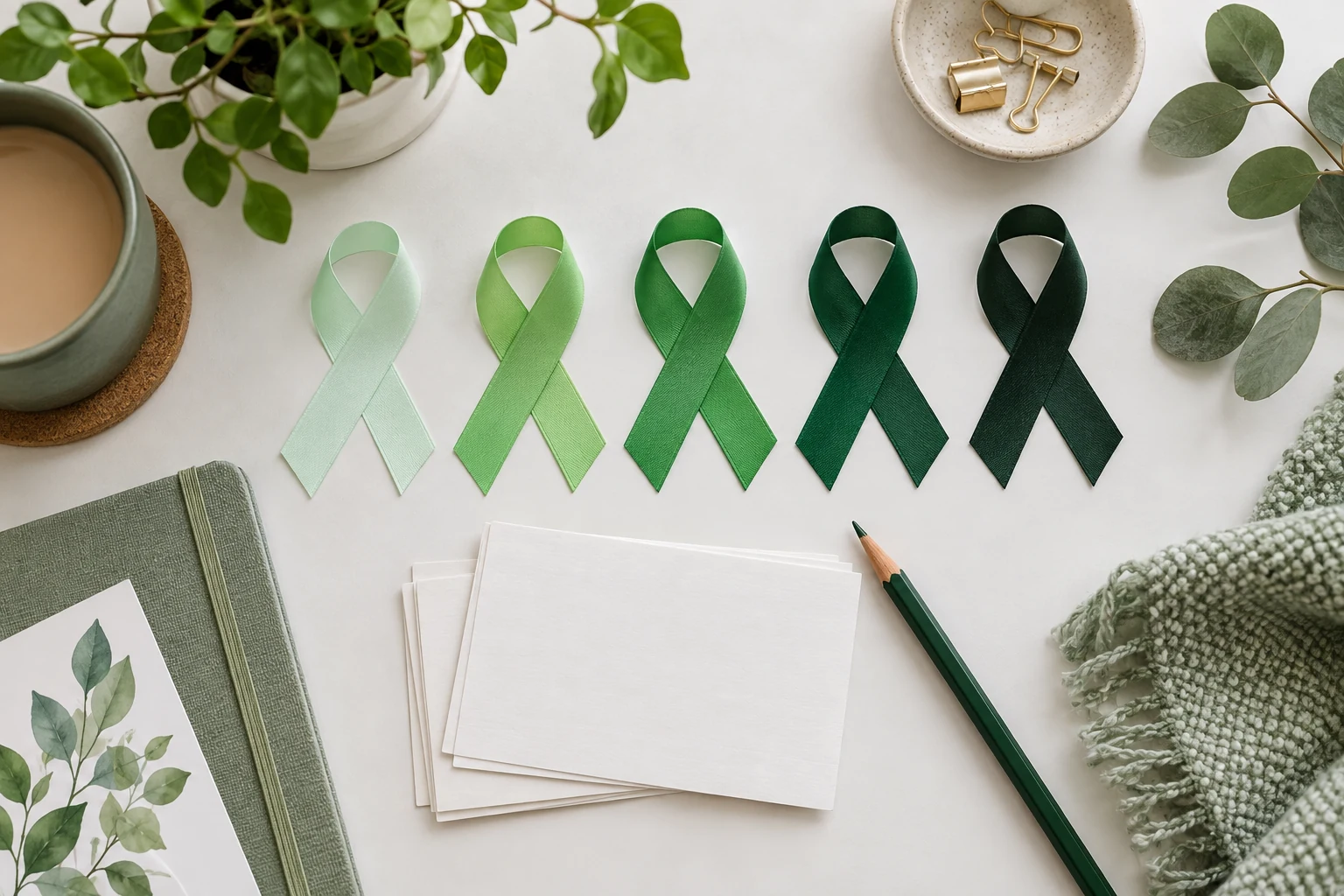
How to Wear or Share the Ribbon Thoughtfully
A green ribbon can be meaningful, but the way it is used matters. Mental health awareness works best when it is paired with humility, privacy, and practical support.
Start with a clear purpose. Are you supporting a workplace awareness day, honoring a loved one, reducing stigma in a classroom, or encouraging reflection? The purpose should shape the wording, setting, and resources you share.
Use person-first, non-judgmental language. Instead of turning the ribbon into a slogan about being "strong enough," focus on care, listening, and the reality that many people experience anxiety, depression, stress, grief, burnout, or resilience challenges at different points in life.
Make participation optional. Some people feel comforted by public awareness symbols; others prefer privacy. A thoughtful campaign gives people ways to join, ways to learn quietly, and ways to opt out without pressure.
If the ribbon prompts someone to think about their own recent mood, worry, energy, sleep, or stress, a private mental health reflection tool may help them organize what they have been noticing. That kind of check-in is educational, not a professional evaluation, and it should be used as a starting point for reflection or a conversation when needed.
Here is a simple checklist for respectful use:
- Say what the green ribbon means in your specific setting.
- Avoid asking people to share personal stories publicly.
- Offer educational context, not fear-based messaging.
- Include quiet ways to access support or further information.
- Use accessible visuals with readable contrast and concise alt text.
- Keep the tone supportive rather than dramatic.
A Gentle Self-Check After Seeing the Green Ribbon
The green ribbon mental health symbol is about awareness, but awareness can become more useful when it turns into a gentle check-in. You do not need to wait until things feel severe to notice patterns. You might ask: Have I felt more tense than usual? Has my motivation changed? Am I withdrawing from people? Do I recover after rest, or do I still feel drained? What helps me feel steady?
These questions do not label you. They help you describe your experience more clearly. For adults who want a structured but low-pressure way to reflect, a comprehensive mental health snapshot can offer a starting point across anxiety, depression, stress, and resilience themes. It is not a formal diagnosis and cannot replace care from a qualified professional, but it may help you put words to what has felt vague.
If you are worried about your safety, someone else's safety, or a sudden change in functioning, seek immediate local help or contact an appropriate crisis or emergency service in your area. For less urgent concerns, consider talking with a trusted person or a qualified mental health professional.

FAQ
What does the green mental health ribbon mean?
The green mental health ribbon means support for mental health awareness, stigma reduction, and more open conversations about emotional well-being. It can show solidarity with people affected by mental health challenges, but it does not reveal anything specific about the person wearing it.
What color ribbon is for mental illness?
Green is the most common ribbon color for broad mental health or mental illness awareness. Specific conditions, communities, or campaigns may use other colors, so context and wording matter.
What does the green ribbon symbolize outside mental health?
Green ribbons can symbolize several causes depending on the campaign, including health, organ donation, environmental, and community causes. To avoid confusion, pair the ribbon with clear mental health awareness wording when that is your intended meaning.
Is dark green ribbon meaning different from regular green?
Dark green can still be used in mental health awareness designs, but shade alone is not a universal code. Some campaigns may use dark green for different causes. If you use dark green, add clear text so the audience understands the mental health context.
Can I use a green ribbon mental health PNG in a blog or post?
Yes, if you have the right to use the image and the message is respectful. Use descriptive alt text, avoid misleading claims, and pair the graphic with supportive information rather than a dramatic or fear-based caption.
Does wearing a green ribbon mean someone wants to talk about their mental health?
Not necessarily. It may show general support, personal remembrance, advocacy, or participation in an awareness event. Let the person set their own boundaries, and treat the ribbon as an invitation to be respectful, not as permission to ask private questions.