Music and Mental Health Benefits, Risks, and Safer Ways to Listen
Music and mental health are closely connected because music is not just background noise. It can shape mood, attention, memory, stress, movement, identity, and social connection. A favorite song may help you settle after a hard day, while the wrong playlist at the wrong time can keep you stuck in rumination. That double edge is why a balanced view matters. Music can be a useful support for emotional awareness, but it is not a replacement for care from a qualified professional. If you are trying to understand your broader mood, stress, anxiety, or resilience patterns, a private mental wellness check-in can be one gentle way to organize what you notice.

How Music Affects the Brain and Mood
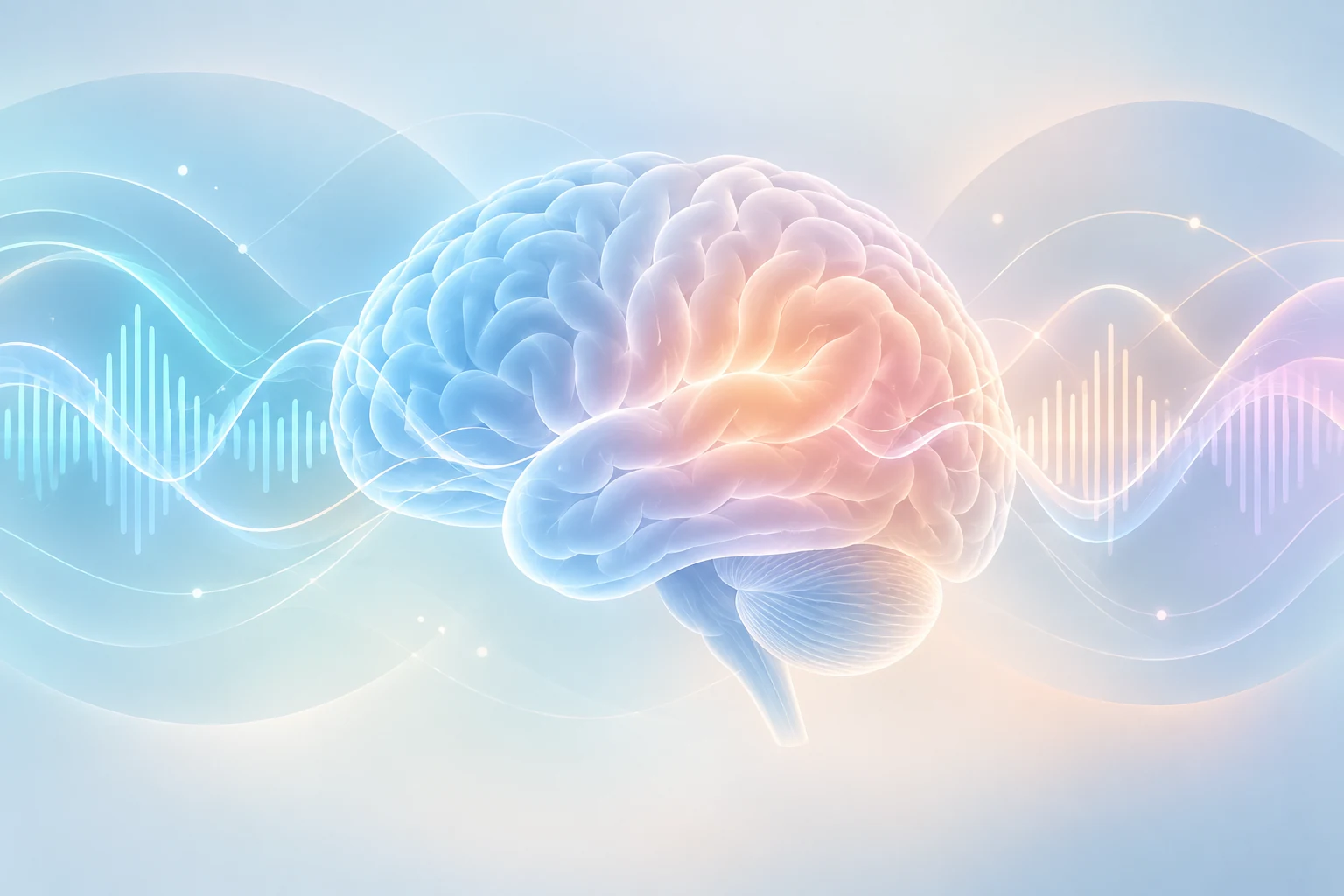
Music reaches several systems at once. Rhythm can influence arousal and movement. Melody and harmony can pull on memory and emotion. Lyrics can give language to feelings that are hard to name. Research reviews often describe music engagement as a mix of passive listening, active music-making, singing, dancing, playlist-building, and social participation rather than one single behavior.
That range helps explain why music can feel powerful to the brain. It can involve attention, prediction, reward, memory, motor timing, and emotional meaning at the same time. A familiar chorus may carry personal history. A steady beat may support walking, breathing, or exercise. A shared concert may add belonging on top of sound.
The mental health effect depends on context. Listening to an energizing song before a demanding task may feel motivating. Playing that same song at bedtime may be too activating. A sad song may help one person process grief, while another person may spiral deeper into painful thoughts. Music is best understood as a tool that interacts with your current state, not as a universal mood switch.
The Positive Effects of Music on Mental Health
The most common benefits of music for mental health tend to fall into four areas: mood regulation, stress recovery, emotional expression, and connection.
Mood regulation is the everyday use most people recognize. You might choose music to calm down, wake up, focus, or feel less alone. This does not mean music fixes the underlying problem. It means it can change the emotional environment enough for you to pause, think, or take the next small step.
Stress recovery is another important pathway. Reviews of music therapy and music listening research suggest that music-based interventions can support stress-related outcomes, especially when they are structured, repeated, and matched to the person. Slow, predictable music may help some people shift toward lower arousal. Rhythmic music may help others discharge tension through movement.
Music can also support expression. Song lyrics, songwriting, drumming, humming, or improvisation can make feelings less abstract. In formal music therapy, a credentialed music therapist may use musical activities to support emotional, cognitive, physical, social, or communication goals. Outside therapy, a playlist can still become a practical reflection tool if you use it with curiosity rather than self-judgment.
Finally, music can build social connection. Singing with others, attending live music, sharing songs with friends, or joining a music group can create a sense of belonging. For mental health, that social layer matters because isolation often makes stress feel heavier.

Can Music Affect Mental Health Negatively?
Yes, music can affect mental health negatively in some situations. This does not make music harmful by default. It means your listening habits, emotional state, volume, timing, and song associations all matter.
One risk is rumination. If you repeatedly play songs that intensify shame, anger, rejection, or hopelessness, music may keep your attention locked on the same painful loop. Sad music is not automatically bad; many people find it validating. The warning sign is feeling more trapped, less able to act, or more disconnected afterward.
Another risk is avoidance. Music can offer a healthy break, but it can also become a way to avoid sleep, conversations, responsibilities, or professional support. If the playlist always has to be on because silence feels unbearable, that pattern may be worth noticing.
Volume and overstimulation also matter. Loud music, constant earbuds, or intense tracks late at night can affect rest and irritability. People who are sensitive to sound, trauma cues, or certain lyrical themes may need more careful boundaries.
Musicians and frequent performers face their own pressures. Performance demands, unstable schedules, criticism, financial stress, and identity pressure can all shape mental health. Loving music does not make someone immune to anxiety, depression, burnout, or substance-related risks.
Music Therapy Is Different From Using a Playlist
It is useful to separate everyday music use from music therapy. Listening to songs for comfort can be meaningful, but music therapy is a professional health discipline. It involves a therapeutic relationship, individualized goals, and a qualified music therapist who chooses musical interventions based on a person's needs.
That distinction matters for trust. A playlist may help you relax before sleep or name an emotion. Music therapy may be used in hospitals, mental health settings, rehabilitation programs, schools, hospice, community programs, and other care contexts. A therapist might use songwriting, lyric discussion, singing, improvisation, rhythm work, music-assisted relaxation, or other methods.
Music therapy should still be viewed as support, not a miracle. Evidence is promising for areas such as stress, anxiety symptoms, depression symptoms, pain, communication, and quality of life, but research quality varies across conditions and study designs. The safest language is: music therapy may help some people as part of a broader care plan.
If you are simply trying to use music more intentionally, you do not need to make it clinical. You can start with a small observation practice: What did I play, why did I choose it, and how did I feel afterward? If your answers reveal wider patterns in anxiety, low mood, stress, or resilience, a structured mental health self-check may help you organize those patterns without treating a song choice as proof of anything.
Live Music and Mental Health
Live music adds something recorded music cannot always provide: shared attention. A concert, choir, open mic, worship service, drum circle, dance night, or small local performance can make people feel part of a group. That can support mood through connection, movement, novelty, and emotional release.
But live music is not automatically restorative. Crowds, cost, alcohol, travel, sensory overload, late nights, and social pressure can make some events stressful. A helpful question is not "Is live music good for mental health?" but "Which music setting supports me right now?"
For one person, that may mean a quiet acoustic set. For another, it may be a dance floor. For someone else, it may mean skipping the event and listening at home because rest is the healthier choice that day.
A Practical Three Minute Music Check-In
People sometimes ask about a "3 minute rule" in music. There is no single mental health rule that says every song must work in three minutes. A more useful idea is a three minute check-in: play one song or part of a song, then pause long enough to notice the effect.
Try this simple format:
- Name your starting state in plain words, such as tense, low, restless, numb, lonely, or overloaded.
- Choose a song for a clear purpose: settle, energize, grieve, focus, move, or connect.
- After about three minutes, ask what changed in your body, thoughts, and urge to act.
- Decide whether to continue, switch the mood, lower the volume, or stop.
This turns listening into self-awareness. It also helps you avoid assuming that a song is helping just because it is familiar.
Building a Healthier Music Routine
A healthier music routine does not require perfect taste or a therapeutic playlist. It needs awareness and flexibility.
Use music to match your needs, not just your habits. If you are anxious, you might start with music that meets your energy and then move gradually toward something steadier. If you are low, you might choose a song that validates the feeling, then follow it with one that creates a little momentum. If lyrics intensify worry, try instrumental music, nature sounds, or silence for a while.
Pay attention to timing. Stimulating tracks may work well during exercise or cleaning but interfere with sleep. Nostalgic music may comfort you one day and unsettle you another day. The same song can have different effects depending on context.
Create different playlists for different functions: calm, focus, movement, connection, grief, and transition. Keep them short enough that you can notice whether they are working. A playlist should support agency, not run your whole emotional day on autopilot.
Also protect your ears and nervous system. Take breaks from headphones. Keep volume moderate. Notice whether constant audio is making it harder to tolerate quiet. Silence can feel strange at first, but it is often where you notice what needs care.
A Gentle Way to Reflect on Your Own Patterns
Music can be a helpful mirror. It can show what you reach for when stressed, what memories still feel tender, what gives you energy, and what helps you feel connected. The key is not to overinterpret every preference. Liking repetitive music, sad songs, intense genres, or one artist for weeks does not automatically mean something is wrong.
Look for patterns over time instead. Do you feel better, worse, or unchanged after listening? Are you using music to support sleep, movement, reflection, and connection, or mostly to avoid everything else? Are certain songs linked to memories that feel too intense to handle alone?
If your answers point to broader stress, anxiety, low mood, or resilience concerns, consider using an anonymous mental wellness snapshot as a starting point for reflection. It can help you put words around your current state while keeping the right boundary: online self-checks and articles are educational tools, not professional medical advice or formal clinical evaluations.
FAQ
How does music affect people's mental health?
Music can affect mental health through mood regulation, stress response, memory, attention, movement, identity, and social connection. The effect depends on the person, the music, the setting, and the reason for listening.
What are the positive and negative effects of music on mental health?
Positive effects can include relaxation, emotional expression, motivation, focus, and belonging. Negative effects can include rumination, overstimulation, sleep disruption, avoidance, or distress when music is tied to difficult memories.
Is music therapy the same as listening to music?
No. Listening to music on your own can be supportive, but music therapy is delivered by a qualified music therapist within a therapeutic relationship and is guided by individualized goals.
Can sad music help mental health?
Sad music can help some people feel understood or process grief. It may be less helpful if it repeatedly leaves you more hopeless, isolated, or unable to take care of yourself.
Why is music so powerful to the brain?
Music is powerful because it can engage emotion, memory, reward, prediction, attention, and movement together. That is why one song can feel calming, energizing, nostalgic, or socially meaningful.
Do high IQ people love music more?
Not necessarily. People with many different cognitive profiles can love music deeply. Musical enjoyment is shaped by personality, culture, memory, exposure, training, emotion, and social context, not intelligence alone.
Can music replace mental health treatment?
No. Music can be a supportive part of self-care or a professional care plan, but it should not replace therapy, medication, crisis support, or medical care when those are needed.