OCD & PTSD Mental Health Test: Screening Beyond Anxiety & Depression
Are you experiencing persistent thoughts, repetitive behaviors, or lingering effects from past trauma that go beyond general anxiety or sadness? Mental health is a broad spectrum, and while anxiety and depression are widely discussed, many other conditions can affect our wellbeing. Understanding these nuances is the first step toward finding the right support.
If you’ve ever wondered whether repetitive thoughts or trauma responses might signal something deeper, modern screening tools offer a private starting point. Using a confidential, science-based platform can offer a vital first step towards understanding your unique emotional landscape. With resources like our confidential online screening platform, you can gain initial insights privately and securely.
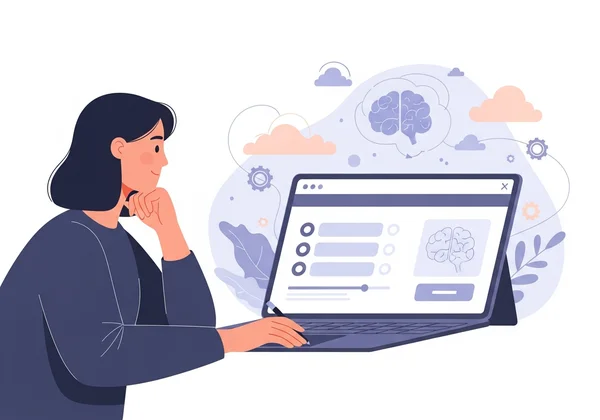
OCD Screening Tests: How They Identify Obsessions & Compulsions
When people hear "OCD," they might picture someone who is extremely neat or organized. While that can be a trait, the reality of Obsessive-Compulsive Disorder is far more complex and often distressing. A proper OCD screening looks beyond surface behaviors to identify underlying patterns of thought and action.
What is OCD? Unpacking Obsessions & Compulsions
OCD is defined by two core components: obsessions and compulsions. It's helpful to understand them separately.
- Obsessions are intrusive, unwanted, and persistent thoughts, images, or urges that cause significant anxiety and distress. They are not just everyday worries; they are often disturbing and feel out of your control. Common obsessions include fears of contamination, doubts about having locked a door, or fears of harming someone accidentally.
- Compulsions are repetitive behaviors or mental acts that a person feels driven to perform in response to an obsession. The goal of the compulsion is to reduce the anxiety caused by the obsession or to prevent a feared outcome. Examples include excessive handwashing, repeatedly checking locks, or mentally repeating certain phrases.
This cycle of obsessions and compulsions can consume a great deal of time and interfere with daily life, relationships, and work.
Recognizing Key OCD Symptoms Beyond Common Anxieties
While both OCD and generalized anxiety involve worry, the focus is different. Generalized anxiety often revolves around real-life concerns like finances, work, or health. The anxiety in OCD, however, is directly tied to the specific obsessions.
A key difference is the presence of compulsions. Someone with generalized anxiety might worry about getting sick, but a person with OCD might spend hours washing their hands until they are raw to neutralize a fear of germs. This urge to perform a ritual to gain relief is a hallmark of OCD and a key area an effective mental health test will explore.
How MentalHealthTest.me Can Screen for OCD Signs
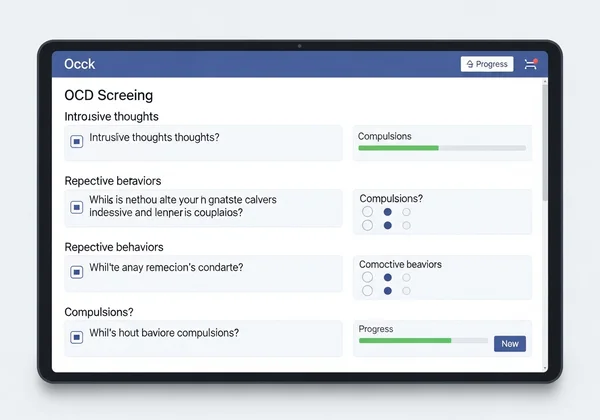
Understanding if your experiences align with OCD can feel overwhelming. A confidential online screening tool provides a safe space to explore these patterns without judgment. The comprehensive test at MentalHealthTest.me includes questions designed to identify signs associated with OCD.
The assessment asks about intrusive thoughts and repetitive behaviors in a structured way. While it is not a diagnosis, the results can provide valuable clarity. Seeing your experiences reflected in a structured report can validate your feelings and empower you to take the next step. If you're wondering about your symptoms, taking a confidential mental health test is a practical and private way to begin.
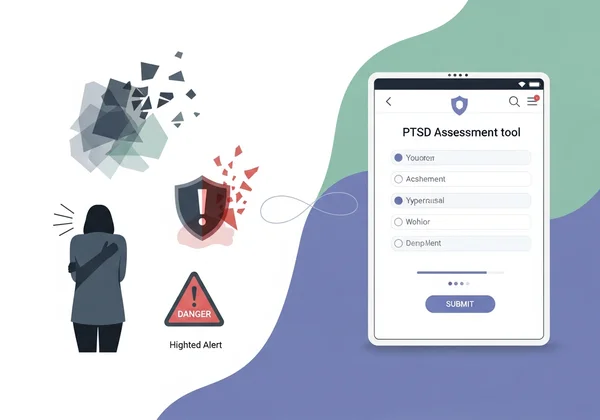
PTSD Assessment Tools: Recognizing Trauma Responses
Post-Traumatic Stress Disorder (PTSD) is a mental health condition that some people develop after experiencing or witnessing a shocking, scary, or dangerous event. It's much more than just having a difficult memory; it's a persistent response that can disrupt your entire life. A PTSD assessment aims to identify the specific cluster of symptoms that define the condition.
Identifying PTSD: Beyond a Difficult Memory
Nearly everyone will experience a traumatic event at some point in their lives, but not everyone will develop PTSD. For those who do, the feelings of stress and fear don't fade away. Instead, they may feel like they are reliving the event over and over, long after the danger has passed.
Trauma is subjective and can result from various experiences, including combat, natural disasters, accidents, assault, or any event that threatens your life or safety. PTSD can develop whether you were directly involved, witnessed it happen to someone else, or learned about a traumatic event affecting a loved one.
Core Symptoms of PTSD: Flashbacks, Avoidance, and Hyperarousal
PTSD symptoms are typically grouped into four categories. A screening tool will often look for signs across these areas:
- Re-experiencing Symptoms: This includes flashbacks, where you feel like you are going through the event again. It can also involve bad dreams and frightening thoughts related to the trauma.
- Avoidance Symptoms: A person may actively avoid places, objects, or thoughts that remind them of the traumatic event. This can lead to feeling detached or estranged from others and losing interest in activities you once enjoyed.
- Arousal and Reactivity Symptoms: Often called "hyperarousal," this includes being easily startled, feeling tense or "on edge," having difficulty sleeping, and having angry outbursts.
- Cognition and Mood Symptoms: This involves trouble remembering key features of the traumatic event, negative thoughts about oneself or the world, distorted feelings like guilt or blame, and a persistent inability to experience positive emotions.
The Value of Anonymous Online PTSD Screening
Talking about trauma is incredibly difficult. The fear of judgment or not being believed can prevent many people from seeking help. This is where anonymous online screening offers immense value. It provides a completely private, low-pressure environment to assess your symptoms.
An anonymous online screening allows you to answer honestly without fear. The immediate feedback can help you connect the dots between a past event and your current feelings, providing a name for what you've been experiencing. This knowledge is a powerful first step toward healing and recovery.
Why Broaden Your Mental Health Screening Horizons?
Focusing only on anxiety and depression can sometimes mean we miss the bigger picture. Our mental health is interconnected, and symptoms can overlap in complex ways. Broadening your screening approach provides a more holistic view of your emotional wellbeing.
The Overlap and Interconnectedness of Mental Health Conditions
It is very common for mental health conditions to co-exist. Many people with PTSD also struggle with depression or anxiety. Similarly, OCD can lead to social anxiety, as sufferers avoid triggers.
A comprehensive mental health test doesn't just look for one thing. It screens for patterns across a range of conditions. This can help identify not only a primary concern but also secondary issues that may be contributing to your overall distress. Understanding this interconnectedness is key to finding effective and comprehensive support.
The Power of Early Insights for Personalized Support
Gaining early insights into your mental health is empowering. A screening result isn’t a label. It’s a tool to help you name your experiences and decide on next steps. This is incredibly useful if you decide to speak with a healthcare professional.
Instead of just saying "I feel bad," you can say, "My screening results suggested I have signs of hyperarousal and avoidance, and that resonates with me." This leads to a more productive conversation and helps professionals tailor their support to your specific needs. The goal is not just a score, but actionable knowledge that guides your path forward.
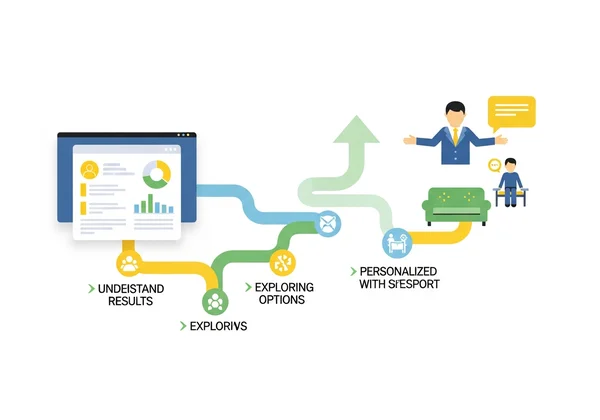
Your Next Steps After an OCD or PTSD Mental Health Test
Receiving your screening results is an important moment. It’s a step toward clarity, but it’s also just the beginning. Understanding what to do with this information is crucial for turning insight into action.
Understanding Screening Results vs. Professional Diagnosis
It is essential to understand the difference between a screening and a diagnosis. This is a critical point we emphasize for user trust and safety.
- A Screening Tool: An online mental health test is a screening tool. Its purpose is to identify potential signs or risk factors for a particular condition based on your answers. It provides a preliminary assessment and educational information.
- A Professional Diagnosis: A formal diagnosis can only be made by a qualified healthcare professional, such as a psychiatrist, psychologist, or clinical social worker. This involves a comprehensive evaluation, including a clinical interview and a review of your personal history.
Think of a screening as a signpost, not a destination. It points you in the right direction and suggests that further exploration may be beneficial.
When and How to Seek Professional Guidance
If your results show moderate to severe signs of a condition—or if symptoms disrupt your daily life—professional support can help. Here are a few ways to start:
- Talk to your primary care doctor: They are a great first point of contact and can provide a referral to a mental health specialist.
- Contact a therapist or counselor directly: Many professionals offer free initial consultations to see if they are a good fit for you.
- Use university or workplace resources: Many schools and employers offer confidential counseling services.
Bringing your screening results to an appointment can be a helpful way to start the conversation. It provides a clear, structured summary of your concerns.
Taking the First Step Towards Clarity and Care
Recognizing patterns in your thoughts or behaviors can feel isolating, but it’s also the first act of self-care. Taking a screening test is a brave step toward reclaiming your emotional balance. While labels like anxiety and depression are common, your experience might be shaped by other conditions like OCD or PTSD.
An online mental health screening is a powerful, private, and accessible tool to begin this journey. It helps translate confusing feelings into clear insights, empowering you with the knowledge to take control of your emotional health. This first step is often the most important one you can take.
Ready to understand your emotional wellbeing better? Take your free mental health test today and get a confidential assessment in minutes.
Common Questions About OCD & PTSD Mental Health Screening
How accurate is an online mental health test for OCD or PTSD?
Online mental health tests, like the ones at MentalHealthTest.me, are based on scientifically validated screening questionnaires used by clinicians worldwide. Their accuracy for screening purposes is high, provided you answer the questions honestly. However, they are designed to identify potential risk factors, not to provide a definitive diagnosis.
Can an online mental health test diagnose me with OCD or PTSD?
No. An online mental health test cannot and should not provide a medical diagnosis. A diagnosis is a complex clinical process that must be performed by a qualified healthcare professional through a one-on-one evaluation. Our tool is for educational and informational purposes to help you understand your symptoms and decide on next steps.
What should I do if my screening suggests signs of OCD or PTSD?
If your results suggest signs of a condition, consider it a prompt for further action. Use the information as a starting point for a conversation with a doctor or mental health professional. The personalized report can help you articulate what you are experiencing. You can start your assessment anytime to get a clearer picture of your symptoms.
Do these tests replace seeing a mental health professional?
Absolutely not. These tests are designed to be a supportive first step, not a replacement for professional care. They can help bridge the gap between wondering about your symptoms and seeking help, but they are a supplement to, not a substitute for, professional medical advice, diagnosis, or treatment.