Online Mental Health Tests: Accuracy Compared to Clinical Screening
Mental health assessment is more accessible than ever, but how reliable are online tests compared to clinical screening? Many people wonder if the free mental health test they found online can truly provide meaningful insights. Should you trust the results, or is a professional evaluation always necessary?
This guide will break down the science behind online mental health assessments. We will explore how these tools work, compare them to traditional methods, and help you understand their proper role. An online screening can be a valuable first step, and knowing when to use one is key to managing your emotional wellbeing. Our confidential mental health test is designed to provide a clear, science-based starting point for your journey.
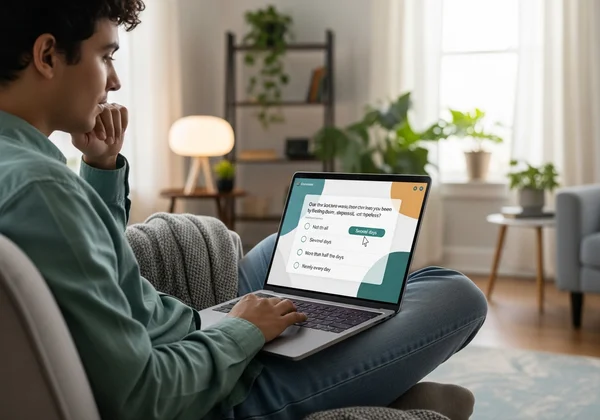
How Online Mental Health Tests Work: Science Behind the Screen
Online mental health tests are not random quizzes. Reputable platforms use structured, evidence-based methods to screen for common symptoms. They are designed to be accessible and provide a private way to check in with your emotional health. Understanding the technology behind them can help build trust in their utility.
The Validated Questionnaires: GAD7, PHQ9 and Beyond
Credible online tests are built upon the same tools used in clinical settings. These are called validated questionnaires. Two of the most common are the GAD-7 (Generalized Anxiety Disorder-7) and the PHQ-9 (Patient Health Questionnaire-9).
- GAD-7: This is a seven-question tool used to screen for and measure the severity of generalized anxiety.
- PHQ-9: This nine-question instrument is a powerful tool for screening, diagnosing, and monitoring the severity of depression.
These questionnaires have undergone rigorous testing and are trusted by healthcare professionals worldwide. By using these standard measures, an online mental health assessment provides consistent, scientifically grounded results—not just opinions.
AI Interpretation: Beyond Basic Scoring
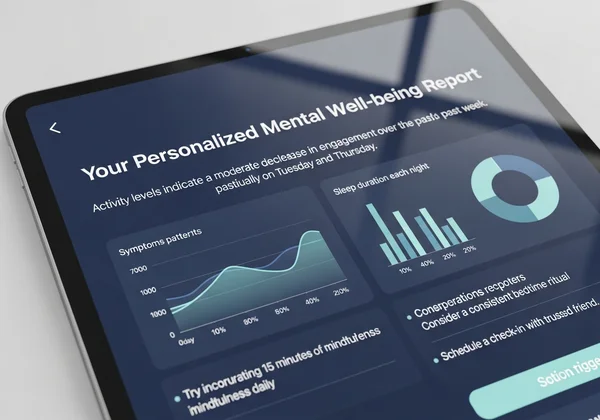
While standard questionnaires provide a score, modern platforms are taking the next step with Artificial Intelligence (AI). A simple score might tell you the severity of your symptoms, but it doesn't explain what it means for you personally.
This is where AI can help. At MentalHealthTest.me, our optional AI-powered analysis provides a deeper, more personalized report. It goes beyond the numbers to offer insights into your unique strengths, challenges, and how your symptoms might be affecting your daily life. This transforms a simple score into a narrative that you can understand and act upon.
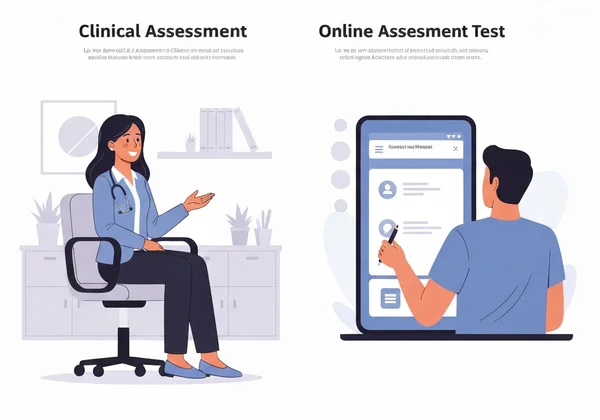
Clinical Screening vs. Online Assessment: Key Differences
While both online tests and clinical screenings aim to assess mental health, they serve different purposes and have distinct differences. Recognizing these differences is crucial for using each tool effectively and responsibly. Think of online tests as the first step in understanding your mental health, while professional evaluations provide a complete picture.
Professional Expertise vs. Algorithmic Analysis
The key difference is the human element. A clinical screening is conducted by trained professionals like psychologists, psychiatrists, or licensed therapists. These experts can interpret nuances, ask follow-up questions, and consider your body language, tone of voice, and personal history. Their diagnosis is based on their extensive training and experience.
An online assessment uses an algorithm. It processes your answers based on pre-set scoring rules from the validated questionnaires. While our AI adds a layer of personalized interpretation, it cannot replace the nuanced understanding and empathy of a human professional. An online test provides a data-driven snapshot, not a clinical diagnosis.
Comprehensive Evaluation vs. Focused Screening
Professional mental health evaluations are comprehensive. They typically include detailed interviews about your personal and family history, lifestyle, and any existing medical conditions. The goal is to create a complete health picture that leads to an accurate diagnosis and treatment plan.
In contrast, an online mental health test is a focused screening tool. Its purpose is to identify potential signs of a specific condition, like anxiety or depression. It's a quick, efficient way to check for red flags. Think of it like a smoke detector: it alerts you to the possible presence of a problem, but a firefighter (the clinician) is needed to investigate and manage the situation.
When Online Tests Provide Valuable Insights
Despite their limitations, online tests are incredibly useful tools when used correctly. They empower you to take a proactive role in your mental wellness by providing accessible, private, and immediate feedback. They serve as an excellent first step for self-discovery and monitoring.
Early Warning Signs: Identifying Patterns
Many people experience subtle changes in their mood or behavior but dismiss them as "just a bad week." An online mental health test can help you quantify these feelings and identify emerging patterns. If you consistently score in the moderate range for anxiety, it provides concrete data that something may be wrong. This early awareness can prompt you to make lifestyle changes or seek help before the issue becomes more severe.
Progress Tracking: Measuring Changes Over Time
Mental health is not static; it fluctuates. Taking a confidential online screening periodically can be a great way to monitor your wellbeing over time. For example, if you've started a new wellness routine like practicing mindfulness, you can use the test to see if it's having a positive impact. It provides objective feedback on your self-care efforts.
When Professional Assessment Becomes Necessary
Online tests are a starting point, not a final destination. There are clear situations where the insights from a screening tool are not enough. In these cases, the expertise of a healthcare professional is essential. Knowing when to escalate your concerns is a critical part of responsible self-care.
Red Flags That Require Immediate Clinical Attention
Certain symptoms and scores should be considered red flags that require professional evaluation without delay. These include:
- High Scores: Consistently scoring in the severe range on a GAD-7 or PHQ-9 test.
- Impaired Functioning: If your symptoms are significantly interfering with your ability to work, study, or maintain relationships.
- Thoughts of Self-Harm: If you are having any thoughts of harming yourself or others, it is a medical emergency. Please contact a crisis hotline or seek immediate professional help.
- Rapid Worsening: If your symptoms are escalating quickly.
These signs indicate that a screening tool is no longer sufficient.
The Diagnostic Process: What to Expect in Professional Settings
Seeking professional help can feel intimidating, but knowing what to expect can make it easier. A diagnostic assessment usually involves a detailed conversation with a mental health provider. They will ask about your symptoms, history, and life circumstances.
They may use the same questionnaires you took online, but as part of a much broader evaluation. The goal is to confirm a diagnosis and rule out other potential causes. From there, they will collaborate with you on a personalized treatment plan that might include therapy, medication, or lifestyle changes.
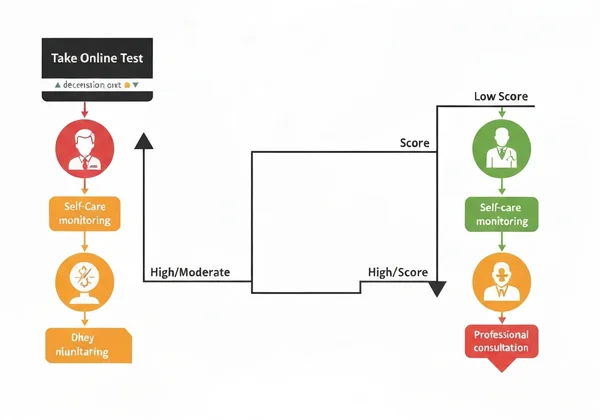
The Decision Flowchart: Choosing Your Path Forward
You've taken a test and have your results—now what? The next step is turning that information into action. Whether your results are reassuring or concerning, they provide a valuable piece of information to help you decide on the best path for your mental health.
Interpreting Your Results: From Scores to Actionable Insights
First, read your results carefully. A low score might simply confirm that you're managing stress well. A mild or moderate score could be a signal to focus more on self-care, such as improving sleep or social connection. A higher score suggests it's a good time to consider talking to a professional. The AI-driven report from our free mental health test can offer personalized suggestions based on your unique answers.
Integrating Online and Professional Approaches for Optimal Mental Health
The best approach often combines the strengths of both online tools and professional care. Use an online test as your personal wellness dashboard—a way to check in with yourself regularly. If your results raise concerns, use them as a conversation starter with your doctor or a therapist. Showing them your results can provide a clear summary of your symptoms, making that first conversation much easier.
Conclusion
To get the most out of online mental health tests, it helps to understand what they're good for—and when they're not enough. They are not a substitute for a professional diagnosis, but they are a powerful tool for self-awareness, early detection, and progress monitoring. Online tests rely on scientifically validated questionnaires like the GAD-7 and PHQ-9. This means they give you a trustworthy snapshot of your emotional health.
By understanding their strengths and limitations, you can make informed decisions on your path to better mental health. Whether you are simply curious, monitoring your wellbeing, or preparing to speak with a professional, a confidential screening is an empowering first step.
Ready to gain a clearer understanding of your emotional health? Start your assessment now at MentalHealthTest.me. It’s free, anonymous, and takes only a few minutes.
Frequently Asked Questions About Online Mental Health Tests and Clinical Screening
How accurate is an online mental health test compared to professional diagnosis?
An online mental health test based on validated tools like the PHQ-9 is highly accurate for screening. This means it's good at identifying people who might have a condition. However, it is not a diagnosis. A professional diagnosis is more comprehensive and is made by a qualified clinician who considers your full personal and medical history.
Can online mental health tests detect all types of mental health conditions?
No. Most online tests are designed to screen for common conditions like anxiety and depression. They are not equipped to detect less common or more complex disorders, such as bipolar disorder or schizophrenia. For a comprehensive evaluation, a professional assessment is always necessary.
What's the best way to discuss my online test results with a healthcare provider?
Bringing your results to an appointment can be very helpful. You can say, "I took this online screening test because I've been feeling anxious, and here are my results." This gives the provider a clear, data-driven starting point for the conversation. It also shows that you are being proactive about your health.
How often should I take an online mental health test to monitor my wellbeing?
There is no single rule, but a reasonable approach is to take a test every few months as a general check-in. If you are going through a stressful period or trying new wellness strategies, you might check in more frequently, perhaps once a month, to track changes. For an easy way to monitor your emotional health, you can use our free screening tool anytime.